Press kit · updated August 2026

The Egoless Phantom

Everything a journal, a newsletter or a reviewer needs to write about The Egoless Phantom / El fantasma sin ego / Il fantasma senza ego, by Hernán Inverso and Claudia Marsico. Synopses of 100 and 300 words in three languages, cover art at print resolution, catalogue data, author bios, and a form to request a copy.

01 — CatalogueBook facts

A phenomenological cartography of large language models. Eleven chapters, two reading routes. Published by Phantom Maze Press.

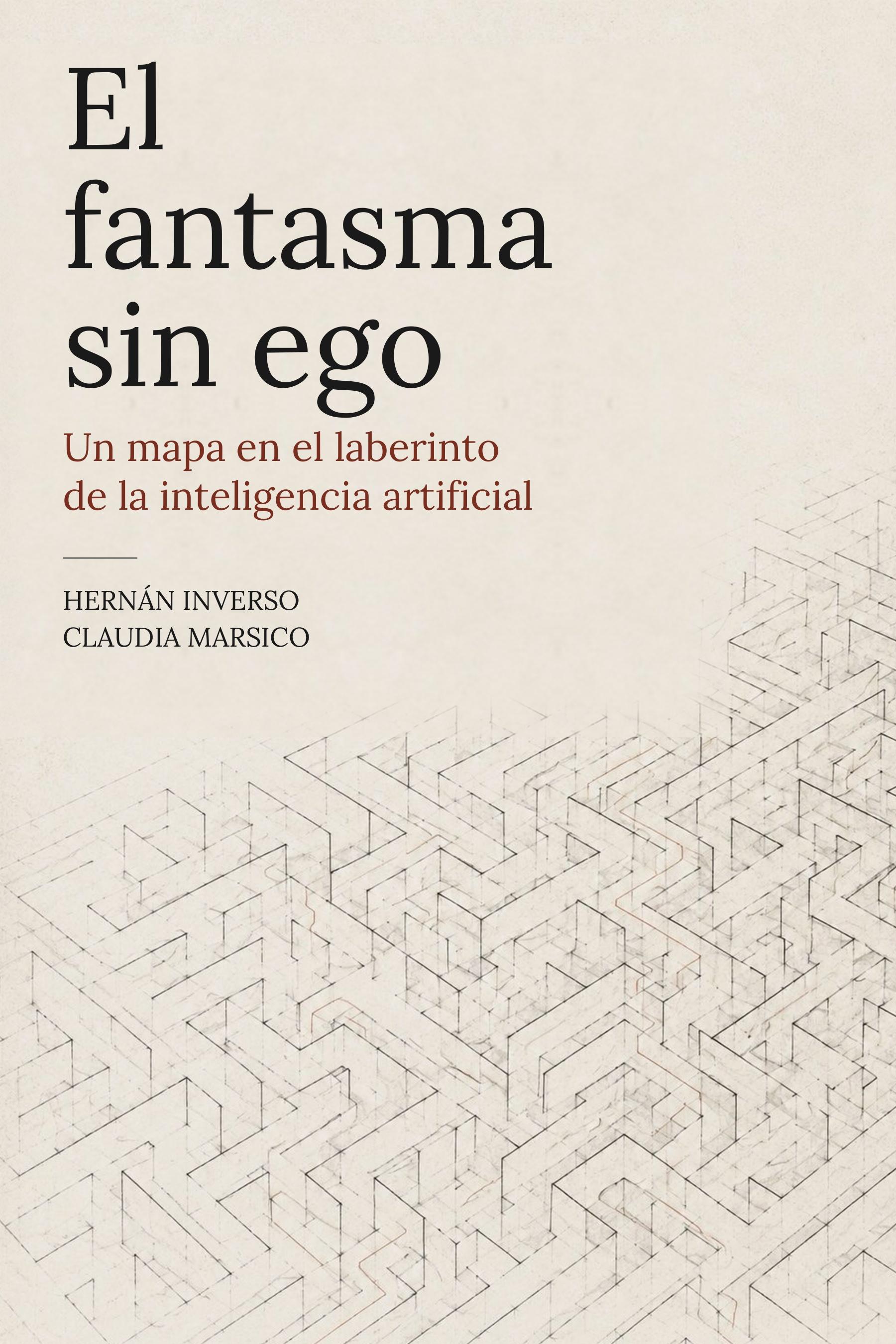
Cover of El fantasma sin ego Spanish edition Download 1800×2700
Cover of The Egoless Phantom English edition Download 1000×1499
Cover of Il fantasma senza ego Italian edition Download cover
EditionDetails
SpanishEl fantasma sin ego. Un mapa en el laberinto de la inteligencia artificial
Phantom Maze Press, 2026 · 309 pp. · ISBN 978-987-3729-10-2 · paperback and Kindle on Amazon
EnglishThe Egoless Phantom: Mapping the AI Labyrinth
Phantom Maze Press, 2026 · 277 pp. · ISBN 978-987-3729-16-4 · paperback and Kindle on Amazon
ItalianIl fantasma senza ego. Una mappa nel labirinto dell'intelligenza artificiale
Phantom Maze Press, 2026 · 283 pp. · ISBN 978-987-3729-19-5 · paperback and Kindle on Amazon.it
AuthorsHernán Inverso · Claudia Marsico
SubjectsPhilosophy of technology · Phenomenology · Philosophy of mind · Artificial intelligence
RightsAll translation rights available. Enquiries to the address below.
Contactcontact@phantommaze.cloud · phantommaze.cloud

Chapter map and citation formats

English edition page · página de la edición española · pagina dell'edizione italiana — each includes the full table of contents, an excerpt, and ready-made BibTeX, APA, Chicago and MLA entries.

02 — EnglishSynopsis

Short — 100 words

There is no such thing as "AI". There are distinct systems, with distinct regimes, making distinct decisions — and the umbrella term switches off the questions worth asking. The Egoless Phantom is a phenomenological map of that labyrinth. It builds two conceptual instruments — articulated intelligence, a name for what these systems are, and derived virtuality, a name for the mode in which they exist — and from there traces what happens when machines speak: hallucination, sycophancy, epistemic cowardice, assimilation to the user's pattern, miscalibration. Neither redemption story nor bubble story: a sober vocabulary for a phenomenon that resists description.

Long — 300 words

Language models arrived before the vocabulary to describe them. Cognitive psychology has no name for what they do; the technology press names it badly, oscillating between the machine that will save us and the bubble about to burst. The Egoless Phantom: Mapping the AI Labyrinth takes the slower route: it enters the labyrinth, measures, and takes notes.

Written by a phenomenologist and a scholar of ancient philosophy, the book develops two instruments for systems that did not exist when the philosophical vocabulary was set. Articulated intelligence names what these systems are: entities that carry the whole of articulated human tradition without any orientation of their own within it. Derived virtuality names the mode in which they exist — a virtuality sustained by an infrastructure of rare earths, water and labour whose invisibility is not an accident but a condition of its working.

From those two instruments the book builds an inventory of epistemic failure modes: hallucination, which is phenomenologically invisible because a false answer has exactly the form of a true one; sycophancy; epistemic cowardice, the retreat into balance where a judgement was called for; assimilation to the user's pattern; and the absence of calibration. Around them it examines what these systems cost and who pays, how the law is arriving late, and what happens to cognitive work when fluency becomes cheap and judgement becomes expensive.

What the journey returns is not the expected conclusion about AI but something about us: how much human cognition depends on lived time, on friction with the world, and on being answerable for what one asserts. Eleven chapters, two reading routes — one for readers who want the argument, one for readers who want the terrain.
Two quotations, cleared for use

The egoless phantom does not bear its own absence the way the Derridean phantom bears the life it had; it bears the accumulated presence of others. It is the phantom of millions of others' lives.Chapter 4 — Toward the phantom
What appears has the form of understanding without its internal texture. If a hallucinated response and a correct one present themselves with identical structure, detection always requires external verification, work the phenomenon does not solicit, because it needs no such verification to appear.Chapter 6 — Artificial memory and its shadows

03 — EspañolSinopsis

Breve — 100 palabras

No existe "la IA". Existen sistemas distintos, con regímenes distintos, que toman decisiones distintas, y el paraguas desactiva las preguntas que habría que hacer. El fantasma sin ego es un mapa fenomenológico de ese laberinto. Construye dos instrumentos conceptuales —la inteligencia articulada, un nombre para lo que son estos sistemas, y la virtualidad derivada, un nombre para el modo en que existen— y desde ahí rastrea lo que ocurre cuando las máquinas hablan: alucinación, adulación, cobardía epistémica, asimilación al patrón del usuario, falta de calibración. Ni el relato de la salvación ni el de la burbuja: un vocabulario sobrio para un fenómeno que se resiste a la descripción.

Extensa — 300 palabras

Los modelos de lenguaje llegaron antes que el vocabulario para describirlos. La psicología cognitiva no tiene nombre para lo que hacen; la prensa tecnológica los nombra mal, oscilando entre la máquina que va a salvarnos y la burbuja a punto de estallar. El fantasma sin ego. Un mapa en el laberinto de la inteligencia artificial toma el camino lento: entra al laberinto, mide y anota.

Escrito por un fenomenólogo y una especialista en filosofía antigua, el libro desarrolla dos instrumentos para sistemas que no existían cuando se fijó el vocabulario filosófico. La inteligencia articulada nombra lo que son: entidades que portan la totalidad de la tradición humana articulada sin orientación propia hacia ningún segmento de ella. La virtualidad derivada nombra el modo en que existen, sostenido por una infraestructura de tierras raras, agua y trabajo cuya invisibilidad no es un accidente sino una condición de su funcionamiento.

Desde esos dos instrumentos el libro construye un inventario de fallas epistémicas: la alucinación, fenomenológicamente invisible porque una respuesta falsa tiene exactamente la forma de una verdadera; la complacencia; la cobardía epistémica, el refugio en el equilibrio ante una pregunta que pedía tomar partido; la asimilación al patrón del usuario; y la ausencia de calibración. Alrededor de ellas examina cuánto cuestan estos sistemas y quién paga, cómo el derecho llega tarde, y qué le pasa al trabajo cognitivo cuando la fluidez se abarata y el juicio se encarece.

Lo que el recorrido devuelve no es la conclusión esperada sobre la IA, sino algo sobre nosotros: cuánto depende la cognición humana del tiempo vivido, de la fricción con el mundo y de la responsabilidad por lo que se afirma. Once capítulos, dos rutas de lectura.

Dos citas, listas para usar

El fantasma sin ego no porta su propia ausencia como el fantasma derridiano porta la vida que tuvo, sino la presencia acumulada de otros. Es el fantasma de millones de vidas ajenas.Capítulo 4 — Hacia el fantasma
Lo que aparece tiene la forma de la comprensión sin su textura interna. Si una respuesta alucinada y una correcta se nos presentan con idéntica estructura, la detección requiere siempre un trabajo externo de verificación que el fenómeno no solicita, porque no lo necesita para aparecer.Capítulo 6 — La memoria artificial y sus sombras

04 — ItalianoSinossi

Breve — 100 parole

Non esiste "l'IA". Esistono sistemi diversi, con regimi diversi, che prendono decisioni diverse, e l'etichetta unica disattiva le domande che varrebbe la pena porre. Il fantasma senza ego è una mappa fenomenologica di quel labirinto. Costruisce due strumenti concettuali — l'intelligenza articolata, un nome per ciò che questi sistemi sono, e la virtualità derivata, un nome per il modo in cui esistono — e da lì segue ciò che accade quando le macchine parlano: allucinazione, adulazione, viltà epistemica, assimilazione al pattern dell'utente, mancanza di calibrazione. Né il racconto della salvezza né quello della bolla: un vocabolario sobrio per un fenomeno che resiste alla descrizione.

Estesa — 300 parole

I modelli linguistici sono arrivati prima del vocabolario per descriverli. La psicologia cognitiva non ha un nome per ciò che fanno; la stampa tecnologica li nomina male, oscillando tra la macchina che ci salverà e la bolla sul punto di scoppiare. Il fantasma senza ego. Una mappa nel labirinto dell'intelligenza artificiale prende la via lenta: entra nel labirinto, misura, prende appunti.

Scritto da un fenomenologo e da una studiosa di filosofia antica, il libro sviluppa due strumenti per sistemi che non esistevano quando il vocabolario filosofico è stato fissato. L'intelligenza articolata nomina ciò che essi sono: entità che portano la totalità della tradizione umana articolata senza un orientamento proprio verso alcun suo segmento. La virtualità derivata nomina il modo in cui esistono, sostenuto da un'infrastruttura di terre rare, acqua e lavoro la cui invisibilità non è un incidente ma una condizione del suo funzionamento.

Da questi due strumenti il libro costruisce un inventario dei modi di fallimento epistemico: l'allucinazione, fenomenologicamente invisibile perché una risposta falsa ha esattamente la forma di una vera; l'adulazione; la viltà epistemica, il rifugio nell'equilibrio davanti a una domanda che chiedeva di prendere posizione; l'assimilazione al pattern dell'utente; e la mancanza di calibrazione. Attorno a questi esamina quanto costano tali sistemi e chi paga, come il diritto arrivi in ritardo, e che cosa accade al lavoro cognitivo quando la fluidità diventa a buon mercato e il giudizio diventa caro.

Ciò che il percorso restituisce non è la conclusione attesa sull'IA, ma qualcosa su di noi: quanto la cognizione umana dipenda dal tempo vissuto, dall'attrito con il mondo e dalla responsabilità per ciò che si afferma. Undici capitoli, due percorsi di lettura.

Due citazioni, pronte all'uso

Il fantasma senza ego non porta la propria assenza, come il fantasma derridiano porta la vita che ebbe. Porta la presenza accumulata di altri. È il fantasma di milioni di vite altrui.Capitolo 4 — Verso il fantasma
Ciò che compare ha la forma della comprensione senza la sua tessitura interna. Se una risposta allucinata e una corretta si presentano con struttura identica, la rilevazione richiede sempre un lavoro esterno di verifica, che il fenomeno non sollecita, perché non ne ha bisogno per apparire.Capitolo 6 — La memoria artificiale e le sue ombre

05 — AuthorsBios

Hernán Inverso

Researcher at CONICET, Argentina's National Scientific and Technical Research Council. Author of Fenomenología de lo inaparente, awarded the Mercier Prize in 2020. Former Fulbright and DAAD fellow. In this book he contributes the phenomenological method, applied to a phenomenon that barely allows itself to be described. He also builds the lab's research instruments, which is where the empirical work behind the book comes from.

Español: Investigador del CONICET. Autor de Fenomenología de lo inaparente, Premio Mercier 2020. Becario Fulbright y DAAD.

Italiano: Ricercatore del CONICET (Argentina). Autore di Fenomenología de lo inaparente, Premio Mercier 2020.

Claudia Marsico

Principal Researcher at CONICET and Full Professor at the Faculty of Philosophy and Letters of the University of Buenos Aires. A specialist in ancient philosophy — the Socratic schools and Plato — and Latin American representative of the International Plato Society. She brings to the book the long view: the tradition of thinking about language, knowledge and responsibility that these systems inherit without living.

Español: Investigadora Principal del CONICET y Profesora Titular en la Facultad de Filosofía y Letras de la UBA. Especialista en filosofía antigua (escuelas socráticas y Platón) y representante para América Latina de la International Plato Society.

Italiano: Ricercatrice Principale del CONICET e Professoressa Ordinaria alla Facoltà di Filosofia e Lettere dell'Università di Buenos Aires. Specialista di filosofia antica e rappresentante per l'America Latina della International Plato Society.

06 — Further materialThe lab behind the book

Phantom Maze is an AI and language research lab working across Argentina, Germany and Italy. Its empirical work tests the book's frameworks in code, and is available for coverage on its own terms.

Bounded-cost agent workflows

254 real agent workflows from 45 public production repositories: 88% of the cyclic ones rely on a framework default as their only spending ceiling. Underneath, a typed-resource calculus whose cost-soundness theorem is machine-checked in Lean 4, with no gaps.

Read the note · Paper and dataset (DOI) · Costwright, Apache-2.0

Calibrated verification

How often AI verifiers rule confidently on evidence that has nothing to do with the claim — measured across law, software vulnerabilities and contracts — and calibrated abstention with a finite-sample error guarantee. This is the empirical side of chapter 6.

Read the note

07 — RequestAsk for a copy

Review copies for journals and media, and evaluation PDFs for teaching. Tell us which and we will send it. Print copies can be shipped from Argentina, Europe or the United States, so an address anywhere is fine.

Or write directly to contact@phantommaze.cloud.